Tuesday, October 12, 2021

Garfield: History I Did Not Know


There are gaps in my knowledge of American history.  For one, neither in school nor

subsequently did I learn much about the period from Presidents Ulysses Grant to Teddy

Roosevelt, except that it was the time of the reconstruction after the Civil War, a pretty

disastrous period, especially for the freed slaves in the South. 

Reading Destiny of the Republic: A Tale of Madness, Medicine, and the Murder of the

President, by Candice Millard, filled in some of that gap in my knowledge.

This book takes readers through the life of James Abram Garfield’s rise from near

nothing to the Presidency of the United States, and his assassination at the hands of a

delusional mad man who thought he received a divine revelation to kill President

Garfield.

James A. Garfield was one of the most extraordinary men ever elected president. Born into abject poverty, he rose to become a scholar, a Civil War hero, and a renowned and admired reformist congressman.  He was a prolific reader of classics, science and philosophy, and an eloquent speaker.  Nominated for president in 1880 by the Republicans against his will, he didn’t campaign for himself.  Nor did he do so earlier when he ran for the Senate – spending a whopping $150 on that campaign.  He literally was born in a log cabin in rural Ohio, with extraordinarily effort he got an education, and was a college President by the time he was in his mid-twenties.  

He was highly intelligent, articulate, and compassionate.  The treatment of blacks may have been much different if he would have had the chance to serve out his term.  During his brief time as President, he engaged in a fierce battle with the corrupt political establishment.   But four months after his inauguration, a deranged office seeker tracked Garfield down and shot him in the back. Incredibly there were no secret service body guards for presidents at that time, nor for many years to come. The shots didn’t kill Garfield. 

The drama of what happened subsequently is a powerful story of a Washington in turmoil. The unhinged assassin’s half-delivered strike left the wounded president as the object of a bitter behind-the-scenes struggle for power—over his administration, over the nation’s future, and, hauntingly, over his medical care. A team of physicians administered shockingly archaic treatments to disastrous effect. As his condition became worse he suffered excruciating pain for over two months, though he remained kind and uncomplaining throughout.  

One image that grips the attention is doctors repeatedly inserted unsterilized instruments and fingers into the wound in search of the bullet.  Alexander Graham Bell, the inventor of the telephone, worked around the clock to invent a new device capable of finding the bullet.  It turned out that the bullet was lodged in a place the doctors never looked, and Bell’s invention could not find it because the doctor in charge refused to search on the opposite side of where the bullet had entered Garfield’s body.

The time when Garfield was lying deathly ill and injured in the White House and after his death people in all parts of the nation were in anxious vigil and mourning (even, apparently, Southerners).  It was a time of a united nation.  Both of my Aaker grandparents, Olaf and Ellen, were born in 1880, the year James A Garfield was elected the 20th President of the USA.  My Romo grandparents were about ten years old that year.  I wonder how much was covered in their history lessons in country school about the Garfield presidency.  Though I don’t ever remember talking politics with my Aaker grandparents, they were probably Republicans. But then being Republican meant something different in those post Lincoln, Garfield, Roosevelt days. Candice Millard writes a very readable and well researched story.  I recently read her first book, River of Doubt: Theodore Roosevelt’s Darkest Journey, and found that an equally engaging story I also knew little about.  I give her an A+ for both books.  September 16, 2021


Monday, August 16, 2021

Inspiration in troubled times


“I do not busy myself with great matters,.... Rather I have stilled my soul….like a weaned child on it’s mother’s lap”  from Psalm 132


What are these “great matters” that trouble the mind?  Just within the last few days...


A UN report on climate change that says humanity is on “red alert”


The Taliban taking over in Afghanistan with lightning speed after the longest war the US has ever waged, 20 years of blood and suffering - spent treasure and lost lives.


An earthquake in the poorest country in this hemisphere with a death toll of over a thousand and rising.  


Migrants by the tens of thousands arriving at the Southern border and the turmoil and anguish of so many with raised hopes, and others with fear of this “invasion.”


Wildfires raging across the West resulting in scorched earth and lost homes for many.


The outcome of any of these great matters won’t be changed by my fretting and worry, but I do pray and watch from afar. And look for signs of hope.  I look for calm and the presence of the Spirit and inspiration. Yesterday was an inspirational day!


 I was inspired by the courage and compassion of Dr. Eva Mora from El Paso.  We listened to her talk at Las Placitas Presbyterian Church about the work she and many volunteers do to get help to the migrants arriving and waiting in shelters in Ciudad Juarez across the border.  It is a work we support through the “Dignity Mission” headed up by Jack and Cheryl Ferrell from that Church.  They had a vision that started with just a few “dignity kits” and now has channeled thousands of kits and tens of thousands of dollars worth of needed material aid to countless migrant families from Central America.  Those are families from villages I used to work with in Central America.  They have come to the wrenching decision to leave their homes and take a chance on getting safely to the US.  Many don’t make it, but others have hope because of Eva Mora and a network of supporters from around the country.. 


Eva Mora said we should not be dismayed and overwhelmed by the great need - but persevere. Wait for the prompting of the Spirit for your purpose and look not only at far away places but also to those neighbors closest to us.  


Another thing inspired us yesterday - words about wisdom and the Bread of Life from Pastor Christa, and a song I was not familiar with but found myself humming the rest of the day.  I found there are lots of You tube recordings.  I love this one by the Notre Dame folk choir.  It is inspiring to see young people sing like they really believe it!


I Am the Bread of Life - Toolan | Notre Dame Folk Choir


Sunday, July 11, 2021

For Everything a Season

 A time to be born, and a time to die. ( Ecclesiastes 7:17 ): — The verse has two parts: "There is a time to be born; and a time to die": and it seems as if a person has as little control over the one as over the other — over the day of one’s death as over the day of birth.

Recently we have observed both the passing of old friends and the birth of a new baby into our this world, and these events cause me to ponder what is most important in life. And to relish life itself, knowing that we are but sojourners for awhile on this earth.


Jim Bergquist was the pastor in Honolulu when he and wife Lorrie greeted me as I arrived for graduate school in 1963.  After long and fruitful lives they died earlier this year, their passing separated only by a month. There will be a joint funeral service tomorrow to commemorate their lives.  I haven’t heard of that happening before. 


Their life journeys have some similarities to ours in that they served the church in many places in the US and abroad.  Jim was a great theologian and scholar who held leadership positions in the Church and taught in seminaries in various Asian countries, including four years in India teaching at Gurukul Theological Seminary in Madras, India.


Jim and Lauri moved about a lot, as have we. The last time we saw them they were experiencing pain and diminished strength brought on by age (late 80s) - though they had  the ever present positive attitude they always exhibited.  At that time Lauri was reading two or three books on history a week. Judy and I mourn as we think about these wonderful friends, even though we saw them infrequently over the years and kept up via Christmas letters for the most part.  They left the world a better place and their legacy carries on through the many lives touched and taught, as well as through the lives of their children and many grand and great grandchildren.


On the other end of life we rejoice in the birth of our second great-grandchild, Lyonna Velgach on  April 28th, the second child born to our granddaughter Leslie and her husband Filipp.  We held a family gathering in Chicago in June with all three of our children, all but one of our six grandkids, and two great-grandchildren.  It gives us a wonderful appreciation for the continuity of the generations as we look back at our path taken in life and see the paths taken by each of our offspring, both affirming and diverging from ours. 


Jim and Lauri leaving Hawaii in 1964.
Bobby, Chris, Kathy and Mark.


One of our last visits with Jim and Lauri when they treated us to Indian food in Minneapolis, Dec. 2016.


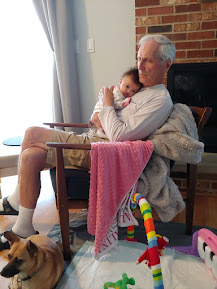
The oldest and youngest in our family. Lyonna at two months, Jerry at 82 years.

Family in Chicago, June 2021.


Monday, June 7, 2021

Morning Has Broken


… like the first morning,

Blackbird has spoken, like the first bird

Praise for the singing, praise for the morning,

Praise for them singing, fresh from the Word.


This Gaelic folk tune from long ago was joined together with words written by Eleanor Farejon and was first published in an English hymnal in 1931.  We know it best from the rendition made popular by Cat Stevens in the 1970s, leading to its inclusion in several hymnals and often sung in worship services.  After becoming a pop star Stevens converted to Islam (he is now known as Yusuf Islam), and went on his own spiritual quest for some years before returning to music.  


I’ve sung it as a solo in churches a few times, and many times alone and with groups.  But the image that comes most readily to mind is dancing this lilting folk melody with Judy whenever it happens to come on the radio or when I put the recording on the phonograph and turn up the volume.  Yes, we still do have a turntable! 


The words prompt me to savor the quiet of the early morning as songbirds gently greet the new day while I meditate. But for most of my life early rising meant starting a new day with a to do list and  getting on with the many demands of the day.  Little time for contemplative prayer and silence when we were raising the family, had jobs to go to, or I made a rush to the airport for another trip.  


Now in retirement and old age it is easier to take in “the sweetness of the wet garden” and appreciate hints of God’s regenerating energy.  Just this week we left the heat of the desert here in New Mexico and went high into the mountains to camp below towering Ponderosa pines where we enjoyed the coolness of the morning where warm sunlight appeared through the branches after a gentle rain.  Add to that the joy of spending days in the mountains with our youngest grandchild, Colin, trying to keep up with his enthusiastic appreciation in his own way of “God’s recreation of the new day”.  As the old beer commercial said, “it doesn’t get any better than this”!


https://www.youtube.com/watch?v=3Rifby1tVE8


Monday, May 31, 2021

Memorial Day, 2021


Once to Every Man and Nation, 


……. comes the moment to decide,

In the strife of truth with falsehood, for the good or evil side,

Some great cause, some new decision offering each the bloom or blight,

The choice goes on forever, twixt that darkness and that light.


The words of this hymn are difficult for me to understand correctly.  Are these words about a nation taking up arms for a just cause, or what is perceived at the moment as a just cause?  Is it about an individual standing for truth and on the side of good against evil? Is it a decision of faith in Christ? All of these, I’m sure.  


It takes courage to make a decision on the spur of the moment when that decision may be a choice that changes everything.  Fifty four years ago in a village in the highlands of Vietnam a young American lieutenant played volleyball with us in our backyard on a Sunday afternoon.  On Monday morning he was killed in a battle with North Vietnam Army soldiers just five miles outside of town.  He had made a decision to serve his country and though I didn’t agree with the rightness of that war, we honor his service and remember that sad day when he and many hill tribe militia soldiers were also killed alongside him, some of the many who made choices that “go on forever” from that day. 


This inspirational hymn tune has been used as background for a video of the Red Army going into battle against the Nazis at St Petersburg.   It has been a rallying call for the anti-abortion crusade.  But also for standing up to power that makes wrong decisions to bring a country to war.  And for many individual decisions - what Christians call the discernment of the will of God.


In fact, it is a protest song.  The above are just four lines from a long poem titled “The Present Crisis”,  written in 1845 by James Russell Lowel.  It is a protest against the U.S. Mexican war which Lowel saw as an act of aggression for the purpose of extending slavery. 


I remember the stretching of truth and the falsehood that President Johnson used to escalate the Vietnam war, and the claims that George W Bush made that Saddam Hussain had weapons of mass destruction in Iraq as the rationale for invasion in what became a long drawn out war and a great strategic mistake.  The destruction unleashed by such decisions for what was deemed a just cause are choices that go on forever.  


How do we know at the moment of decision if it is a right or even noble direction?    


These gripping words set to an inspiring tune have been sung in many settings.  Listen to this rendition sung by Christians in a Cathedral in India.


https://www.youtube.com/watch?v=gHzXKTwCtg0


Wednesday, May 19, 2021

East of Eden


I finally read John Steinbeck’s novel East of Eden almost 70 years after it was published in 1952.  It is a long book (600 pages), and at times I got bogged down in some of the sub-plots, but I stuck with it as it was considered by Steinbeck himself as some of his best writing.  I was fascinated with the main theme and my attention was drawn to the Hebrew word Timshel.  


In my Cristian formation in the Lutheran tradition, I was taught about the importance of free will.  After all is said about good and evil and God’s love, we humans do have a choice.  We can accept God’s love, but we can also reject it.  What’s more we have the capacity to choose between good and evil. 


The most intriguing character in the novel for me is Lee, Adam Trask’s loyal Chinese servant. Lee acts as the novel’s philosophical and common sense compass. The Biblical story of Cain and Abel and the struggle humans have with good and evil is central to the story.


It seems like Steinbeck uses this character to develop his own thinking about what he called the “most profound question in the world”.  Lee takes the story of Cain and Abel to a group of wise old Chinese scholars for their take on it’s meaning and reports back:


“Don’t you see? The American Standard translation orders men to triumph over sin, and you can call sin ignorance. The King James translation makes a promise in “Thou shalt,” meaning that men will surely triumph over sin. But the Hebrew word, the word timshel–‘Thou mayest’–that gives a choice. It might be the most important word in the world. That says the way is open. That throws it right back on a man. For if ‘Thou mayest’–it is also true that ‘Thou mayest not.’ Don’t you see?”


One reviewer of the book, Dolly Doyle, wrote:

“The title East of Eden is a reference to the story of Cain and Abel. After killing his brother in a fit of jealous rage, Cain is condemned to a lifetime of wandering by God. In Genesis 4:16, Cain is described as going "east of Eden" into the land of Nod.


The direct references to the Cain and Abel story do not end with the title. Both sets of brothers featured in the book—Charles and Adam, and Aron and Caleb—mirror Cain and Abel (the latter pair are even named after them). Cain and Abel are typically viewed as opposites: Cain is treacherous and evil, while Abel is virtuous and good. Similarly, such dualism is suggested in the relationships between the two sets of brothers, though Steinbeck complicates the idea that one brother is good while the other is evil every time by emphasizing the importance of choice in moral action and the possibility of redemption for those who have done evil things in the past.”


Steinbeck tries to point out that the free will to make choices, which God has given to humans, means that though we will not be able to overcome original sin, we may decide to ask for forgiveness and that redemption is possible for everyone. There is plenty of evil depicted in the story, especially in the character of Kate, the mother of the twin boys Caleb and Aron. Is there even redemption for her?


This is a book I would love to discuss with a book club, but I doubt there are enough recent readers of it to form a group.  The movie of East of Eden, with James Dean, came out in 1956. I have not seen it but plan to and will probably be disappointed.


It is fascinating to find that the English folk rock group Mumford and Sons wrote a song directly inspired by John Steinbeck's novel East of Eden.  The song Timshel refers to the Cain and Abel account as an important symbol in East Of Eden's storyline.  


https://www.youtube.com/watch?v=f8D7MLsNAb8


Sunday, May 16, 2021

Prompts from Old Songs and Psalms during the Pandemic: #10

                                      In Peace I shall both lie down and sleep, Lord, make me secure.. From Ps 4

Hear My Words, Oh Lord… at dawn I will plead before you and wait,  from Ps 5


During the night I occasionally fret, but I am not overly worried as life flows on and I ponder in silence.  These times are slow and I am slow as I try to enjoy each day as age advances. 

But then there are disruptions and the unexpected happens.  In Psalm 6 the writer is in distress, weary with sighing, weeping in sorrow with trembling bones.  I dare not complain, as my suffering was acute, not chronic like some friends who live with constant pain.  


I was in the hospital for ten days.  These weeks have alternated between pain, anxious waiting and tranquility.  Finally I had a procedure called “Biliary Duct dilation percutaneous, with SJB”.  The radiologist thinks it went well.  But the doctors in the hospital had given me too much of an antibiotic and I came down with an allergic reaction - hives and extreme itching all over my body.  One of the seven plagues, I guess.  


Thankfully we are able to take a break from the medical regimen and go out to find a quiet place to camp along the Big Hole river.  We had a magnificent view of towering cliffs above with pine trees silhouetted against the blue sky and puffy clouds in quiet majesty. 


 I am reading Kathleen Norris’s book “Acedia and Me”  Acedia, which I was not familiar with, is defined as a state of listlessness or torpor, of not caring or not being concerned with one's position or condition in the world.  This is the way it is in life.  There is a lot of acedia happening these days as people feel listless, restless and out of sorts with isolation. Acedia has been written about by Christian monks and mystics for centuries.  No matter how we may want to pray the psalms and be in tune with the divine presence, life presents us with times of aridness and acedia.  Yes, even boredom.


One day we took a ride over a mountain road with magnificent vistas of  snow capped peaks high above and a herd of elk in the river valley below.  We were the only ones on that road.  It was so easily available - you just have to know where to go.  Every day is not a mountain top experience, but some are.  


https://www.youtube.com/watch?v=yCjhhvj7mv0